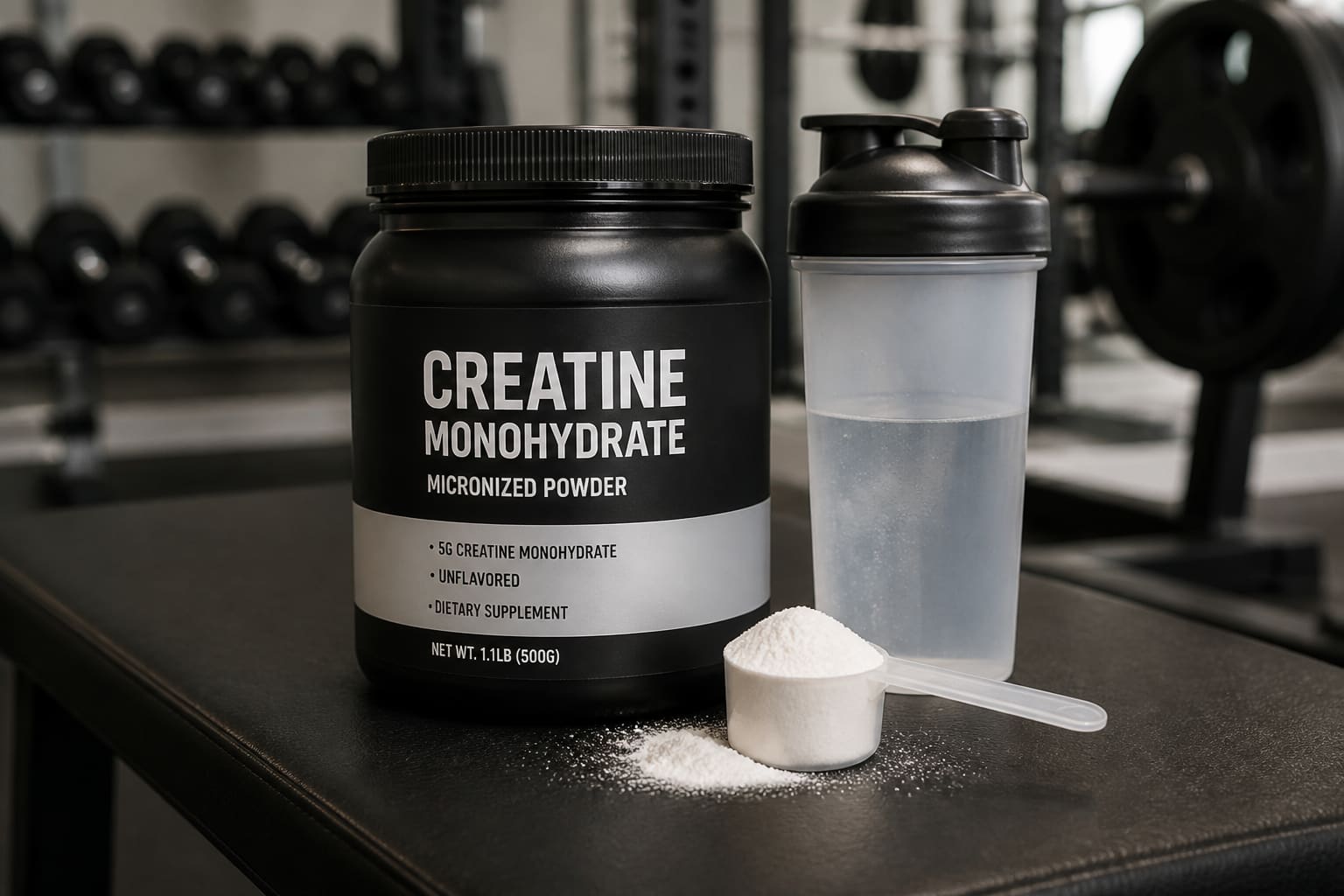
Creatine is one of the most researched sports supplements — popular in gyms and on wellness roundups (including Healthline-style fitness reads). It is not an anabolic steroid. Educational overview only; check with a clinician if you have kidney disease or take medications.
Also see: gym supplements worth buying.
What Creatine Does (Plain English)
Your muscles use creatine-related energy systems for short, hard efforts (sprints, lifts). Supplementing can raise muscle creatine stores for some people, which may support training performance and lean mass when paired with progressive training and food.
Common Forms You’ll See on Labels
| Form | Beginner note |
|---|---|
| Creatine monohydrate | Most studied, usually best value |
| Micronized monohydrate | Often mixes more easily |
| HCl / buffered / “advanced” blends | Marketing is loud; evidence rarely beats plain mono for most people |
| Creatine + caffeine mega stacks | Watch total stimulants |
How Beginners Usually Use It
- Choose creatine monohydrate from a reputable seller
- Follow label serving guidance (many protocols use ~3–5 g daily after any optional loading phase — confirm with current trusted sports-nutrition guidance / your coach-clinician)
- Take it daily; consistency matters more than exact clock time
- Drink normal fluids; expect possible mild water weight in muscles
- Keep training and protein intake honest
Safety Mindset
- Buy sealed products; avoid mystery powders from unverified sellers
- Not a shortcut for skipping sleep or food
- Teen athletes: involve a parent + qualified coach/clinician
- Stop and seek care for unusual pain, dark urine, or swelling concerns
FAQ
Will creatine make me bulky overnight?
No. Training, genetics, and total diet drive visible change over months.
Do women use creatine?
Many do for performance and training support — same evidence base mindset applies.
Original Sen Gideons News Studio editorial. Not medical or sports-medicine advice.