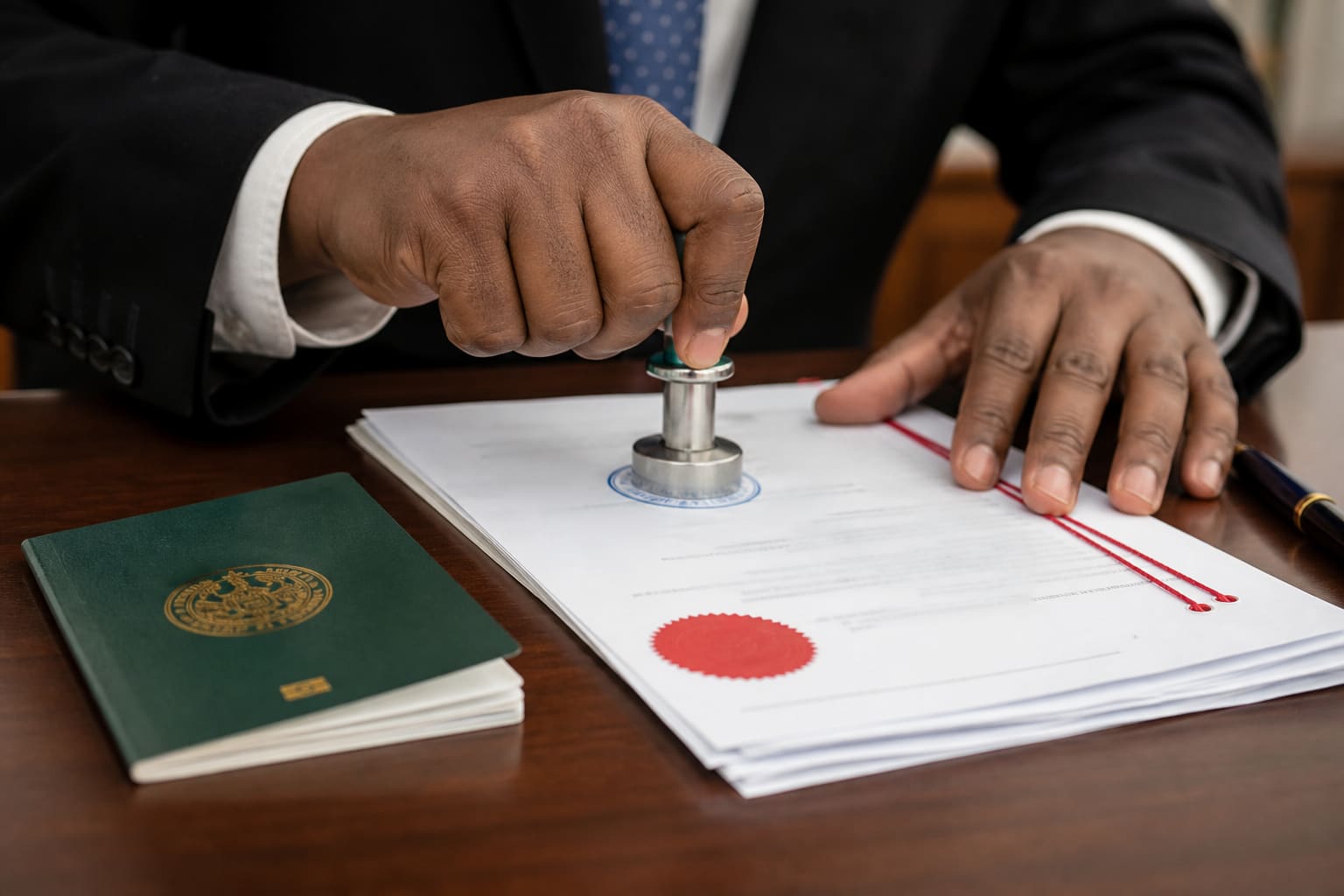
Attestation / legalisation proves a Ghanaian document is genuine for a foreign receiver. Schools, employers, and embassies each want a specific chain — don’t assume one stamp fits all.
Common Chains (Conceptually)
| Step | Role |
|---|---|
| Notary / commissioner for oaths | Swears or certifies copies where allowed |
| Issuing institution confirmation | School/registry verification sometimes required |
| MFA / foreign ministry legalisation | When the destination asks for it |
| Embassy attestation | Destination-country mission in Ghana |
Your checklist (Germany vs UAE vs Canada) decides the path. Related: Affidavit · Transcript · Police clearance.
Practical Tips
- Photocopy only after you know whether originals must be sighted
- Name spellings must match passport
- Budget time — attestation queues are real
- Beware street “embassy stamps”
FAQ
Apostille?
Ghana’s participation and the destination’s rules determine whether apostille language applies — confirm for your country pair.
Can someone else submit for me?
Some missions allow authorised representatives with letters — ask that embassy.
Sources / Verify With
- The destination embassy/consulate checklist
- Ministry of Foreign Affairs processes where required
- Your notary / lawyer
Original Sen Gideons News Studio editorial. Not legal advice.