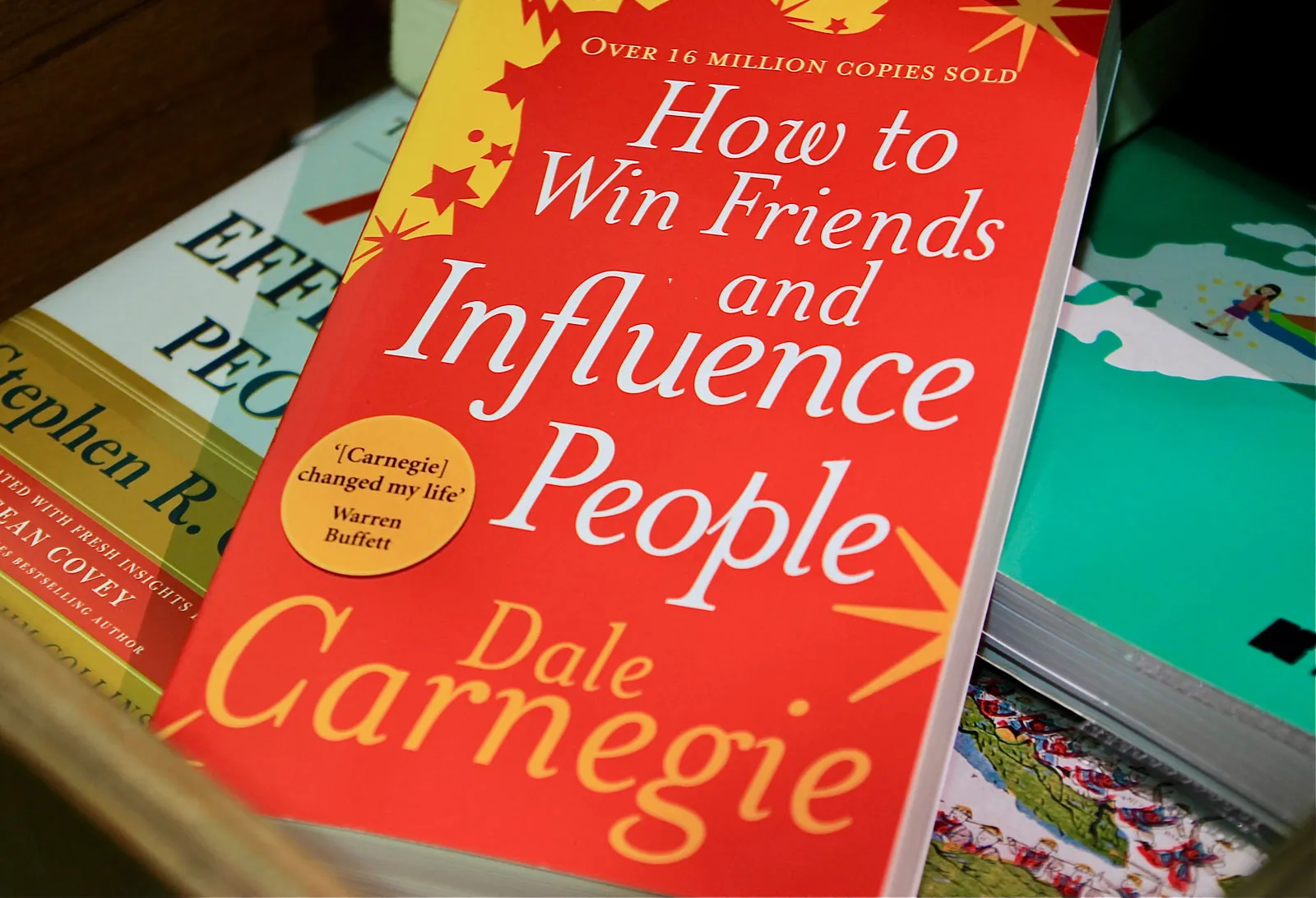
How to Win Friends and Influence People by Dale Carnegie is nearly a century old and still one of the most searched soft-skills books. Interviews, customer service, campus groups, and sales all keep it relevant.
What the Book Teaches
Carnegie focuses on making people feel respected: smile, remember names, listen more than you talk, avoid cheap arguments, and give honest appreciation.
Primary reference: How to Win Friends and Influence People — Wikipedia.
Principles People Still Quote
| Principle | Modern use |
|---|---|
| Don’t criticise first | Feedback without humiliation |
| Give honest appreciation | Praise specific effort |
| Become genuinely interested | Better networking than elevator pitches |
| Remember names | Respect signal in any room |
| Be a good listener | WhatsApp/meetings included |
| Talk in terms of their interests | Sales & teamwork |
| Make the other person feel important | Leadership without ego |
How Not to Misuse It
- Manipulation fails long-term.
- Flattery without sincerity is obvious.
- Boundaries still matter — kindness ≠ people-pleasing.
- Cultural context matters; adapt tone for Ghanaian professional settings.
Who Should Read It
- Job seekers and national service personnel
- Customer-facing roles
- Founders handling clients
- Anyone who “knows the work” but freezes socially
Quick Facts
| Detail | Info |
|---|---|
| Author | Dale Carnegie |
| First published | 1936 |
| Theme | Human relations / influence |
| Pair with | Email etiquette + interview practice |
FAQ
Is the book outdated?
Examples are old; principles about respect and listening are not.
Will it make me fake?
Only if you perform instead of practice. Real interest is the point.
Short version for busy people?
Listen more, argue less, remember names, appreciate specifically.
Sources
Original Sen Gideons editorial summary.