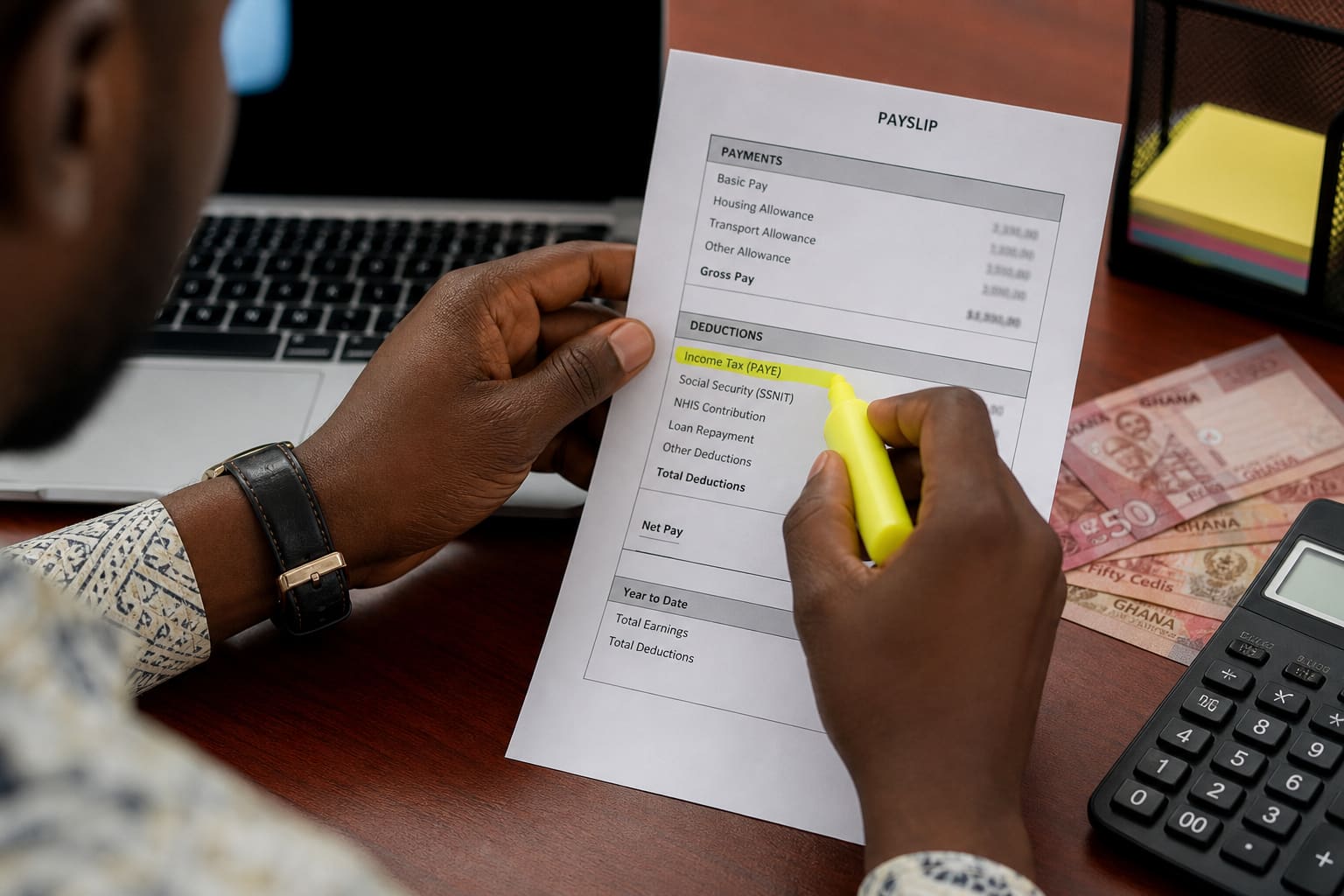
PAYE (Pay As You Earn) is income tax your employer usually deducts from salary and remits under Ghana’s tax rules. Exact bands and reliefs change — use GRA’s current tables, not a 2018 screenshot.
What You’ll Often See
| Item | Meaning (plain English) |
|---|---|
| Gross pay | Before statutory deductions |
| PAYE | Income tax withheld |
| SSNIT / other statutory | Separate from PAYE — see SSNIT guide |
| Net pay | What hits your account |
Worker Checklist
- Confirm you have a valid TIN on file with HR
- Keep payslips — useful for visas, loans, and disputes
- Ask HR how bonuses / overtime are taxed in your contract
- If you freelanced elsewhere, ask GRA about other filing duties
Myths to Ignore
- “Nobody checks PAYE” — employers and GRA systems exist for a reason
- “I can reclaim everything every December automatically” — refunds/reliefs follow rules; verify officially
- Random “tax hack” WhatsApp PDFs
Related: TIN · Register a business · NSS allowance.
FAQ
Two jobs?
Tell payroll teams what they need to know; dual employment can affect withholding. Confirm with GRA/HR — don’t hide income sources.
Informal cash work?
Different compliance picture — get advice for your situation.
Sources / Verify With
- Ghana Revenue Authority (GRA) PAYE guidance
- Your HR / payroll office
Original Sen Gideons News Studio editorial. Not tax advice.