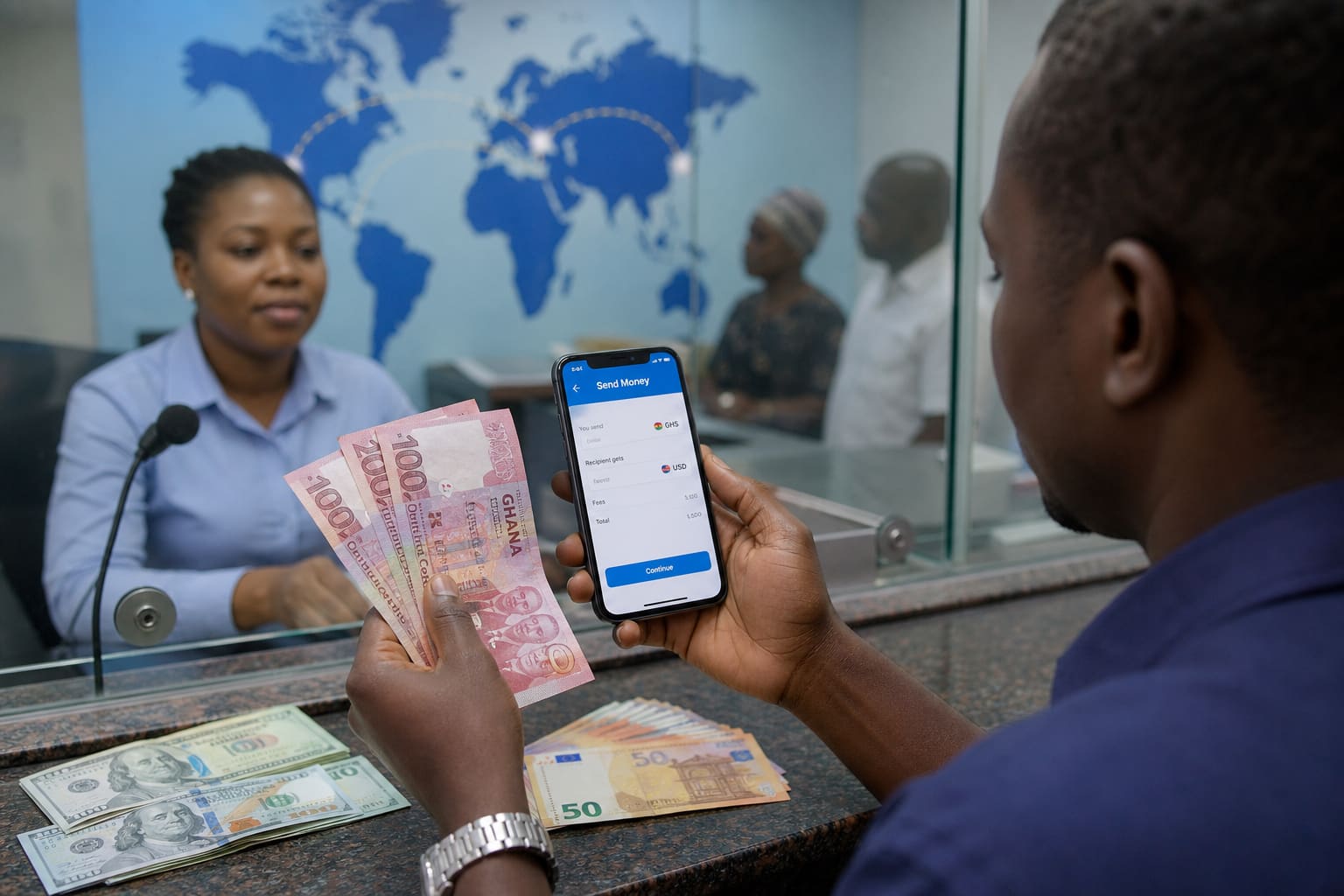
Sending money from Ghana abroad (school fees, family support, business payments) involves FX, compliance checks, and licensed channels. Limits and documentation rules change — confirm with your bank or licensed remittance provider.
Common Channels
| Channel | Typical use |
|---|---|
| Bank wire / transfer | Larger formal payments |
| Licensed remittance / fintech apps | Smaller, faster transfers |
| Education fee payment partners | Some universities prefer designated rails |
Avoid giving cash to a stranger who “has a cousin in London.”
What Providers Usually Ask
- Valid ID / Ghana Card
- Purpose of transfer (tuition, family, etc.)
- Beneficiary bank details or pickup details
- Source-of-funds questions for larger amounts
Related: Open a bank account · MoMo charges · TIN.
Compare Before You Send
- Total cost = fee + FX margin (not fee alone)
- Delivery time and cut-off hours
- Whether the school/landlord accepts that method
- Receipt you can show for visa files if needed
FAQ
Black-market FX “better rate”?
Higher legal and fraud risk. Prefer regulated channels.
Receiving MoMo overseas?
Most overseas payouts are bank or cash pickup — check corridor rules.
Sources / Verify With
- Your bank’s international transfers desk
- Licensed remittance providers’ published rates/fees
- Bank of Ghana consumer notices where applicable
Original Sen Gideons News Studio editorial. Not financial advice.