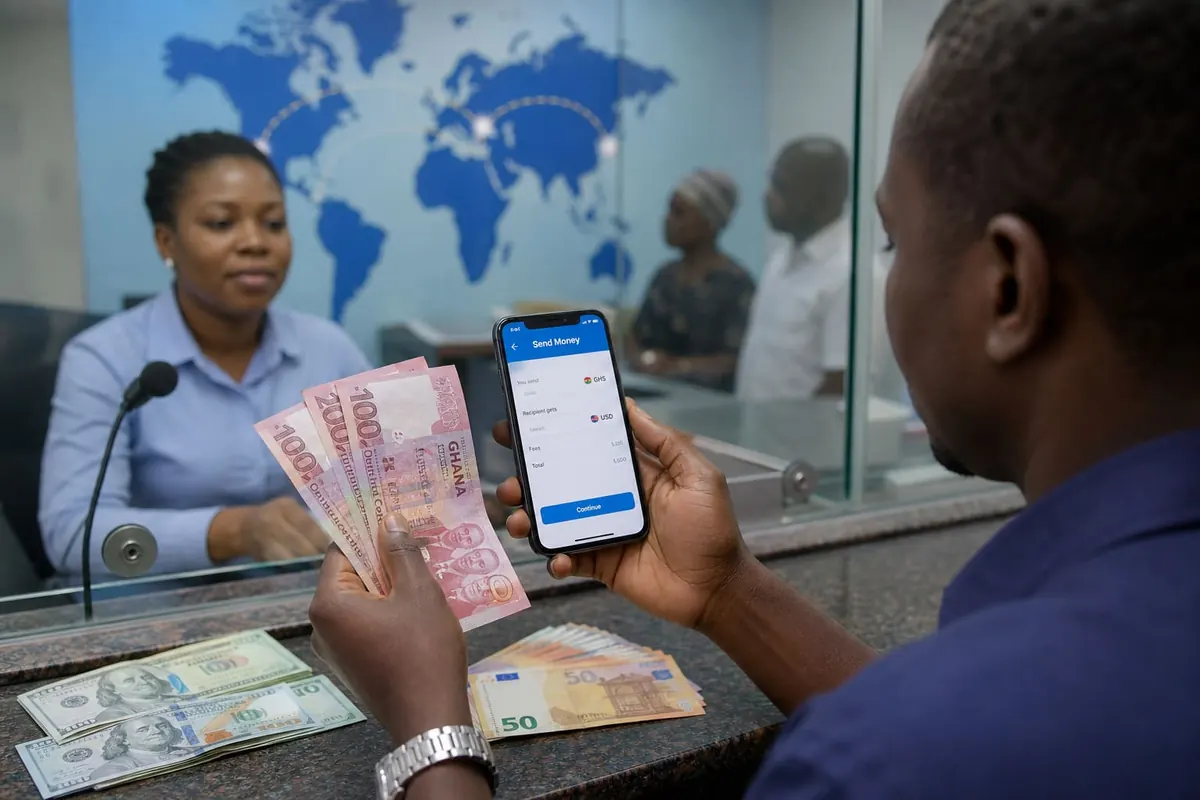
Sending money from Ghana abroad — school fees, family support, or supplier payments — means choosing a licensed channel, understanding FX and fees, and avoiding romance/fraud “send to this account” traps. This overview compares the practical options and the checks that matter.
Common channels
- Banks — SWIFT and bank draft style transfers; good for larger formal payments
- Licensed money transfer operators — often faster for family support corridors
- Fintech / app rails where legally available for your destination
- School / hospital payment portals that accept international cards or partner collections
Compare the real cost
- Transfer fee
- FX rate margin (often larger than the “fee”)
- Receiving fees deducted by intermediary banks
- Speed vs certainty for deadline payments (tuition due dates)
Ask for the total amount the beneficiary receives before you commit.
Documents and compliance
Expect KYC: Ghana Card, purpose of transfer, and sometimes invoices or admission letters for large education payments. This is normal AML practice — not the teller “troubling you.”
Practical tuition payment tips
- Use the exact student ID and account details from the school portal
- Send a test small amount first if the corridor is new to you
- Keep SWIFT receipts / MT references for the school’s finance office
- Watch cut-off times so the value date does not miss registration deadlines
If you hold USD already
A foreign currency account can simplify some payments — see dollar account basics — but SWIFT fees still apply.
Red flags
- Someone you met online demanding urgent fees to release a prize/relationship
- Personal MoMo “agents” promising offshore USD delivery
- Requests to receive money into your account for a cut (mule activity)
FAQ
Which is cheapest?
It changes by corridor and amount — compare fee + FX together.
Can I send from MoMo directly abroad?
Product availability changes; use only official telco/partner features, not unofficial wrappers.
What if the school says they did not receive it?
Share the transfer reference and ask both banks to trace; keep every PDF.
Send money abroad through licensed channels, compare total landed amount, keep references for tuition desks, and refuse urgency scams. Speed is useful — compliance and the correct beneficiary details are essential.
Disclaimer
Sengideons.com does not host any files on its servers. All point to content hosted on third-party websites. Sengideons.com does not accept responsibility for content hosted on third-party websites and does not have any involvement in the same.