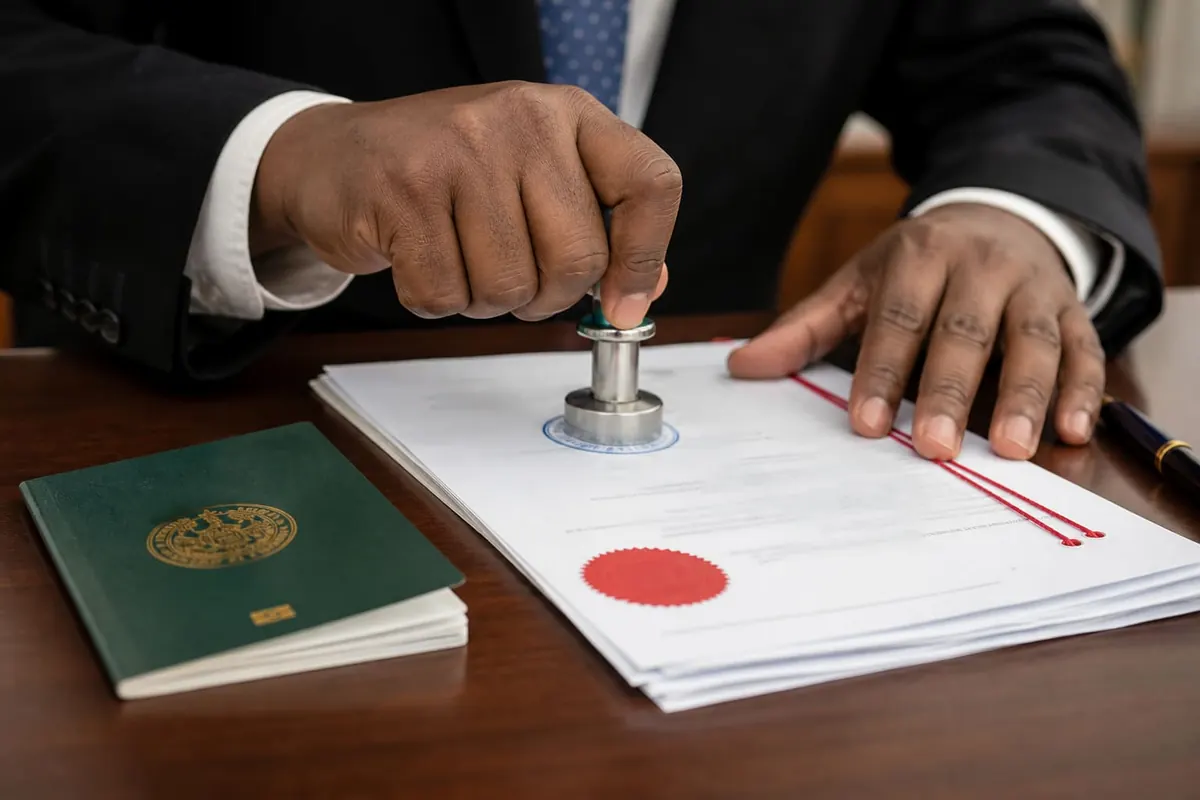
Document attestation in Ghana is the chain of authenticating papers for foreign use — often involving notaries, the Ministry of Foreign Affairs, and embassy legalisation steps depending on the destination country. Skipping a link in the chain is why files bounce at visa desks.
Common documents people attest
- Birth, marriage, and academic certificates
- Police clearances
- Company documents
- Powers of attorney for use abroad
Typical chain (varies by destination)
- Obtain a proper original or certified true copy from the issuing authority.
- Notarise / commission as required.
- Authenticate at the Ministry of Foreign Affairs (or current competent office) if needed.
- Legalise at the destination country’s embassy/consulate in Ghana if required.
- Keep a scan of every stamped page.
Apostille vs embassy legalisation depends on treaty relationships — follow the destination country’s published rule, not a generic blog order.
Practical tips
- Ask the receiving institution for the exact authentication path
- Budget time — chains take days or weeks
- Names must match across passport and certificates
- Use reputable notaries; verify stamps are clear
Related processes
Some files also need affidavits or a power of attorney. Do not confuse attestation with translation — some countries need sworn translations too.
Scams
- Same-day “MFA stamps” from unverified agents
- Holding your only original hostage
FAQ
Can one attestation work for every country?
No — destination rules differ.
Do photocopies work?
Usually certified copies from issuing bodies are required first.
Should I use an agent?
Optional; if you do, get a written checklist and never surrender your only originals without receipts.
Attest documents in the order your destination country requires, keep scans of every stamp, and verify names before you start the chain. Correct sequencing saves repeat MFA queues.
Disclaimer
Sengideons.com does not host any files on its servers. All point to content hosted on third-party websites. Sengideons.com does not accept responsibility for content hosted on third-party websites and does not have any involvement in the same.