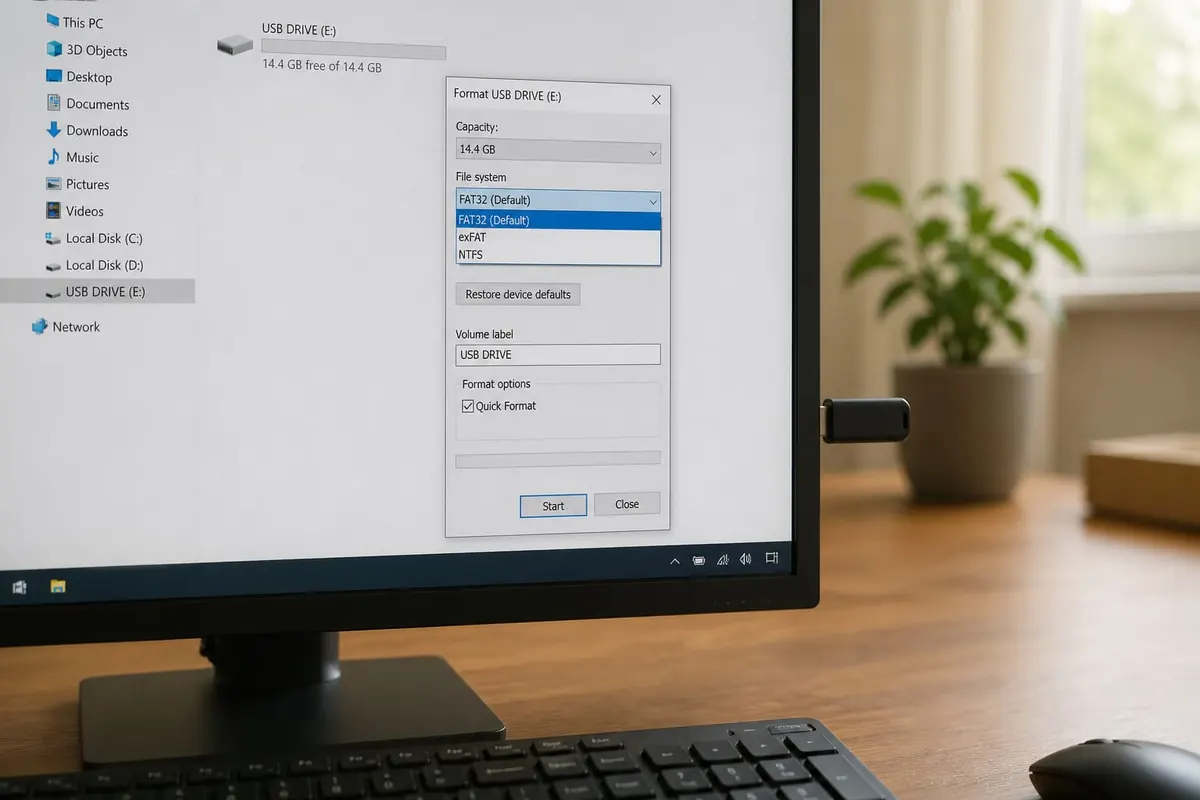
Formatting a USB drive chooses a file system (FAT32, exFAT, NTFS) that decides which devices can read it and how large files can be. Pick wrong and your phone will not see the stick — or Windows movies will not copy.
Quick chooser
- FAT32: widest compatibility; 4GB max file size limit
- exFAT: good for large files across modern Windows/Mac/many TVs
- NTFS: Windows-friendly; phones/cameras may not write to it
How to format on Windows (careful)
- Backup anything on the USB first — format erases data.
- Insert drive → File Explorer → right-click → Format.
- Choose file system and allocation size defaults unless you know better.
- Start and wait.
- Eject safely.
Phone / camera notes
Many phones prefer FAT32/exFAT for OTG. Test after formatting. Related: file sharing, Windows installer USB (different purpose — do not mix casually).
FAQ
Why won’t a 5GB video copy to FAT32?
File size limit — use exFAT/NTFS.
Is quick format enough?
Usually yes for reuse; full format is slower.
Can format fix a corrupted drive?
Sometimes; failing hardware needs replacement.
Format USBs with the file system your devices share, after backing up. FAT32 for compatibility, exFAT for big files, NTFS mainly for Windows-centric use.
Disclaimer
Sengideons.com does not host any files on its servers. All point to content hosted on third-party websites. Sengideons.com does not accept responsibility for content hosted on third-party websites and does not have any involvement in the same.